

You’re just going about your day. Sipping your morning coffee. Then you grab a spoonful of ice cream — and boom. A sharp, shooting pain fires right through your tooth. It catches you completely off guard. You freeze for a second. Then you think, “Maybe it’ll go away.”
That’s what most of us do. We wait. We hope. We ignore it.
But here’s the thing — that little ache isn’t random. Your tooth is waving a red flag. And the sooner you pay attention, the easier things get. Root Canal Treatment sounds intimidating, sure. But honestly? It’s one of the most misunderstood procedures out there. It doesn’t cause pain. It ends it. Stick around and we’ll break down exactly what drives a tooth to this point — and what to watch for before it gets worse!
What a Root Canal Actually Fixes
Here’s something most people don’t know. Every tooth has a soft core. It’s called the pulp. Tiny nerves, blood vessels, and connective tissue all live in there. When your teeth are healthy and happy, you’d never even know the pulp exists.
But sometimes things go sideways. The pulp gets infected. Or damaged. And once that happens, it gets inflamed — and it stays that way. Yeah. That’s coming from the pulp.
So what does a root canal do exactly? It clears all that damaged tissue out. The dentist cleans the inside of the tooth, then seals it up. Pain gone. Tooth saved. That’s really it! Your natural tooth gets to stay in your mouth — exactly where it should be.
The Common Causes Behind a Damaged Tooth
Okay so what actually gets a tooth to this point? It’s not always obvious. A few different things can knock the pulp off balance. Some happen slowly. Others hit out of nowhere. Let’s go through them one by one.
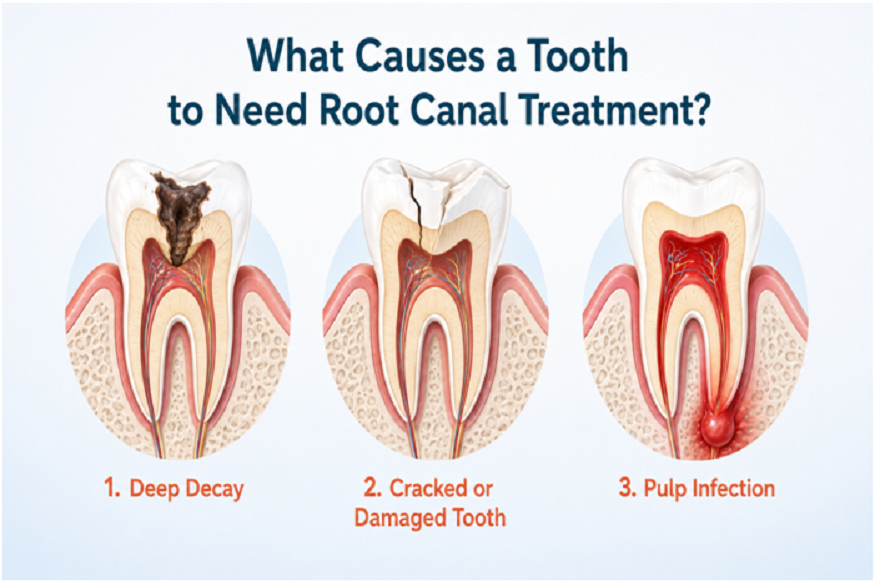
Deep Decay That Sneaks In
Cavities are quiet. That’s what makes them dangerous. They start off tiny — so small you can’t feel a thing. No pain, no sensitivity, nothing. But they keep growing. Slowly. Steadily. Boring deeper into the tooth over time.
Read More: Health Tips Before Your GAMCA Medical Test
Here’s where it gets serious. When decay finally reaches the pulp, bacteria flood right in. Infection kicks off almost immediately. And that’s when the pain shows up — sometimes all at once, sometimes gradually building.
What lets decay get that far? Usually a mix of things. Too many sugary snacks. Not brushing well enough. Skipping dental checkups for months or years. All of that gives decay the time and space it needs to do real damage. Catching a cavity early is the easiest fix there is!
A Cracked or Chipped Tooth
Cracks are tricky. Even a tiny one — barely visible to the eye — can create a direct path to the pulp. Bacteria don’t need much room. They find a way in.
And teeth crack for all kinds of reasons. Some of the most common ones are:
- Chomping on something hard like ice, popcorn kernels, or hard candy
- Grinding your teeth while you sleep (more people do this than you’d think)
- An old filling that’s worn down and finally gives out
What makes cracks sneaky is they don’t always hurt right away. You might feel nothing for weeks. Then suddenly — sharp pain out of nowhere. So even if a chip seems minor, get it checked. A quick visit now can save you a lot of grief down the line!
A Sudden Injury or Trauma
Accidents happen to everyone. A hard hit during a game. A slip on the stairs. An awkward fall where your mouth takes the impact. In an instant, your tooth gets rattled.
The wild part is the tooth can look perfectly fine on the outside. No chip, no crack you can see. But the pulp inside? It might be damaged. Bruised. Dying off slowly.
And the pain from trauma doesn’t always arrive right away. Sometimes it takes weeks. Sometimes months. So if you’ve taken a knock to the face and one tooth feels a little off later on — even much later — don’t brush it off. That delayed pain is worth taking seriously!
Repeated Dental Work on the Same Tooth
Some teeth just go through a lot over the years. A filling to fix a cavity. Then a bigger filling when that one cracks. Then a crown. It adds up. Each procedure is helpful, but each one also stresses the pulp a little more.
Over time, all that repeated work wears the pulp down. What started as routine dental care can slowly push a tooth toward needing a deeper fix.
If this sounds familiar, you’re in good company. It’s really common. And it’s nothing to be embarrassed about. A root canal is just the next step in keeping that tooth healthy and functional. Think of it as giving a hardworking tooth the help it finally needs!
Warning Signs Your Tooth Is Trying to Tell You Something
Teeth aren’t quiet when something’s wrong. They send signals. The problem is most of us aren’t sure what to look for. Here’s a list of warning signs that mean it’s time to call your dentist:
- Pain that lingers after hot or cold drinks — even after the drink is gone
- A deep, dull ache when you bite or put pressure on the tooth
- Swelling or puffiness in the gum right around one tooth
- A tiny bump on the gum that looks like a pimple
- One tooth that looks noticeably darker than the others
- Sensitivity that flares up and just won’t calm back down
Even one or two of these is enough. Don’t sit on it.Catching issues early is always easier — and a whole lot less expensive — than waiting until things spiral.
What Happens If You Ignore the Signs
Look, we all want to believe the pain will just sort itself out. But with an infected tooth, that’s not how it works. The infection doesn’t go away on its own. It spreads. It deepens. It gets worse with every week that passes.
Here’s the ugly truth about waiting too long:
- The infection moves from the pulp down into the root
- From the root, it can spread into the jaw and surrounding tissue
- What was once a dull ache becomes severe, constant, round-the-clock pain
- A pus-filled abscess can form and may require urgent treatment
- Bone around the tooth starts to break down
- In bad cases, the tooth is lost entirely
None of that is fun to read. But it’s real. And it happens when people delay care too long.
Here’s the flip side though — act early and none of that has to happen. A quick appointment nips the problem before it snowballs. An Emergency Root Canal in Cypress is available for those moments when the pain hits hard and fast. You don’t have to white-knuckle it through the night hoping it gets better!
What to Expect During Treatment
Let’s tackle the biggest fear head-on. You’ve heard the horror stories. Maybe from a friend, maybe from an old TV show. Root canals have a terrible reputation — and most of it is completely outdated.
Modern Root Canal Treatment is calm. It’s comfortable. Honestly, it’s not that different from getting a routine filling.
Here’s what the appointment actually looks like:
- Numbing the area — your dentist makes sure you feel nothing before anything else happens
- Removing the pulp — the infected tissue gets cleared out gently and thoroughly
- Cleaning the canal — the space inside the root gets disinfected and shaped
- Sealing it up — the tooth is filled to keep bacteria from coming back
- Adding a crown — a crown protects the tooth and restores its full strength
From start to finish, most people are genuinely surprised at how relaxed they feel. The old idea that a root canal is agonizing? That’s a myth. The procedure relieves the pain — it doesn’t create it!
And the cost? The average cost of a root canal varies depending on which tooth needs treatment and how involved the work is. Front teeth are simpler and usually less expensive. Back molars are more complex. A lot of dental offices offer flexible payment plans to make it easier on your budget. If you’re searching for a root canal in Cypress TX, a good team will walk you through pricing before you commit to anything.
How to Protect Your Teeth Going Forward
Once you’re through treatment, you’ll probably want to do whatever you can to avoid going through it again. Good news — prevention is mostly simple stuff. Nothing complicated, nothing expensive. Just some consistent habits that add up over time!
Here’s what actually makes a difference:
- Brush at least twice a day and floss every single day
- Wear a mouthguard if you grind at night or play contact sports
- Stop chewing on ice, hard candies, or anything that puts unusual stress on your teeth
- Show up for your regular cleanings and checkups — don’t skip them
Small things, done consistently. That’s the whole formula. Catching a small problem at a regular checkup is a thousand times easier than dealing with an infection that’s had months to grow. Your future self will thank you for it!
Take Care of That Tooth Today
So here’s the big picture. Deep decay, a cracked tooth, physical trauma, or years of repeated dental work — any of these can push a tooth toward needing a root canal. The causes aren’t random. They build up over time. And the warning signs show up before things get really bad.
The fix isn’t something to dread. It really isn’t. Root canal treatment ends the pain, saves the tooth, and gets your life back to normal faster than you’d expect.
So don’t wait for a small ache to turn into something you can’t ignore. The team at Cypress Towne Dental is friendly, experienced, and ready to help. Book a checkup. Ask every question you have. Whether it’s a routine visit or a full treatment, the trusted cypress dentists serving the area make the whole experience easy, clear, and stress-free. Your tooth deserves the care — and so do you!
Frequently Asked Questions
Does a root canal treatment actually hurt a lot?
Honestly, no — not with modern dentistry. The area gets completely numbed before anything starts, so you won’t feel pain during the procedure. Most patients are genuinely caught off guard by how relaxed and comfortable the whole thing feels from beginning to end.
Read More: What Should You Do If Your Tooth Hurts After Extraction?
How long does a root canal appointment usually take?
It depends on the tooth. Front teeth are simpler and typically take under an hour. Back molars have more roots and need a bit more time. Some treatments wrap up in one visit, while more involved cases might need a quick follow-up appointment to complete everything properly.
Can I eat normally right after my root canal?
Give it a little time first. Wait until the numbing wears off completely — otherwise you might accidentally bite your cheek or tongue without feeling it. For the first day or so, soft foods are your best bet. After that, most people are back to eating comfortably and normally without any issues.